
Yellowjacket
Scientific Name
Vespula spp.
Size
3/8 – 5/8″
Key Features
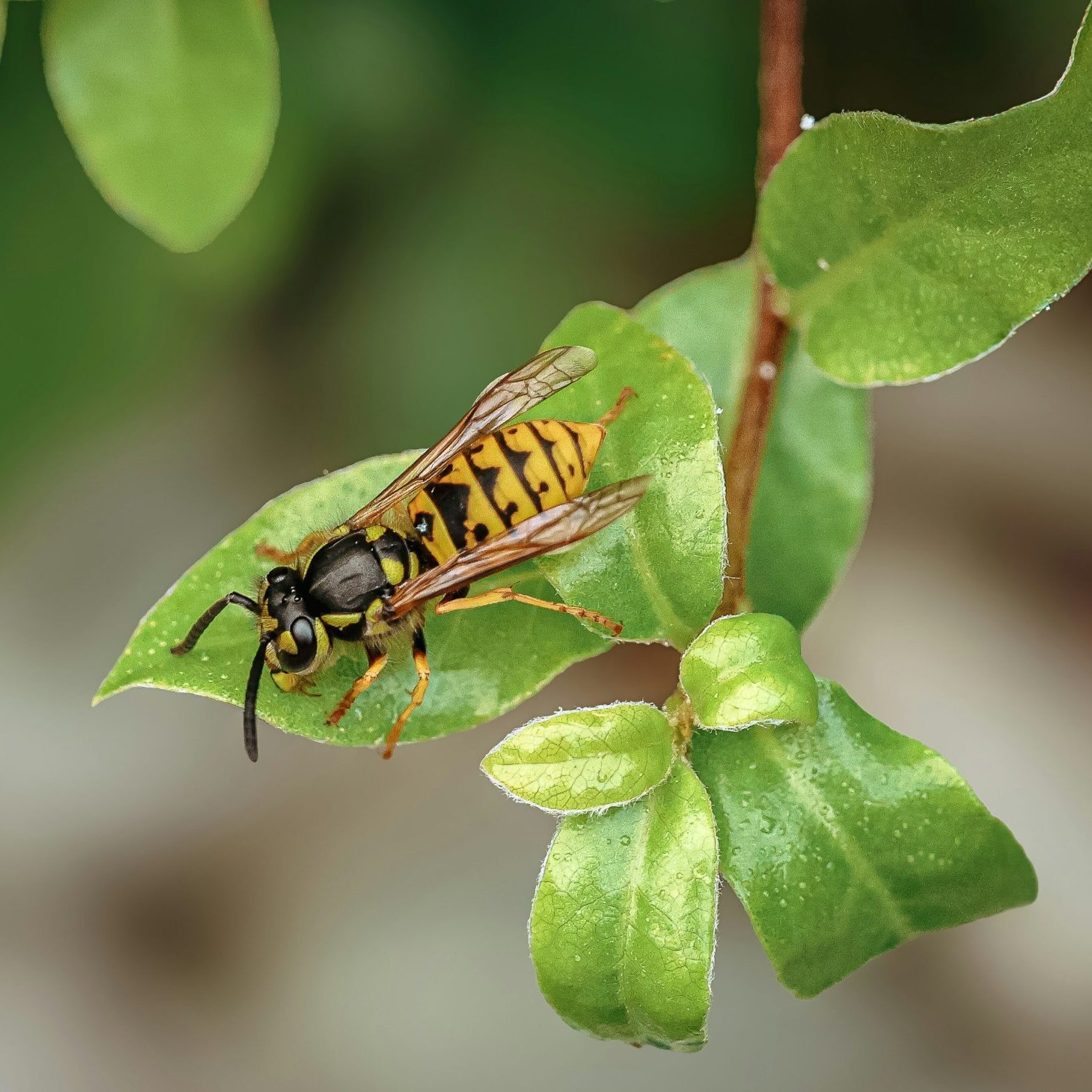
- Black and yellow banded abdomen
- Wings folded longitudinally at rest
- Compact body
Biology and Habits
Yellowjackets are social insects forming large colonies consisting of a queen and infertile workers. Colony size varies, but under ideal conditions, populations can reach up to 4000 or more wasps. At the beginning of each season in spring, inseminated queens will emerge from hibernation and seek out suitable locations to build a nest. Depending on the species, nests may occur in the ground, inside a structure, or attached to the outside of a structure or shrub. The queen will care for her first batch of workers before turning full time to egg laying. Nests are constructed from wood mixed with saliva to produce a papery pulp, which is used to create cells for larvae and a carton to protect the nest. Later in the season, males and new queens are produced and begin to mate. The colony will then begin to die off with only the new queens entering hibernation to begin the cycle anew next spring. Yellowjackets create brand new nests each year, so removal of old nests is not necessary.
Yellowjackets are highly aggressive when their nests are disturbed. The entrance of the nest is protected by guards who will use pheromones to alert the colony of danger. Each wasp is capable of stinging multiple times and some species will latch as they sting, making removal difficult.
Control
When yellowjacket colonies are located in areas where human or animal contact is likely, control measures are required. Because of the aggressive nature of these wasps, their elimination may be a matter of safety. Once a nest is located, the entrance should be treated with either a dust or an aerosol to quickly eliminate workers and larvae present in the colony. A residual pesticide applied to the nest will continue to kill returning workers. If a nest is located inside a structure, it is NOT recommended to close the opening as wasps may find their way inside the living space. Instead, treat the entry point with an appropriately labeled pesticide and leave the entrance open until activity has ceased for at least two weeks.
Need help identifying or controlling this pest? Give Revolution Pest Defense a call or send an email for a free inspection.