
Great Black Wasp
Scientific Name
Sphex pensylvanicus
Size
3/4 – 1 1/4″
Key Features
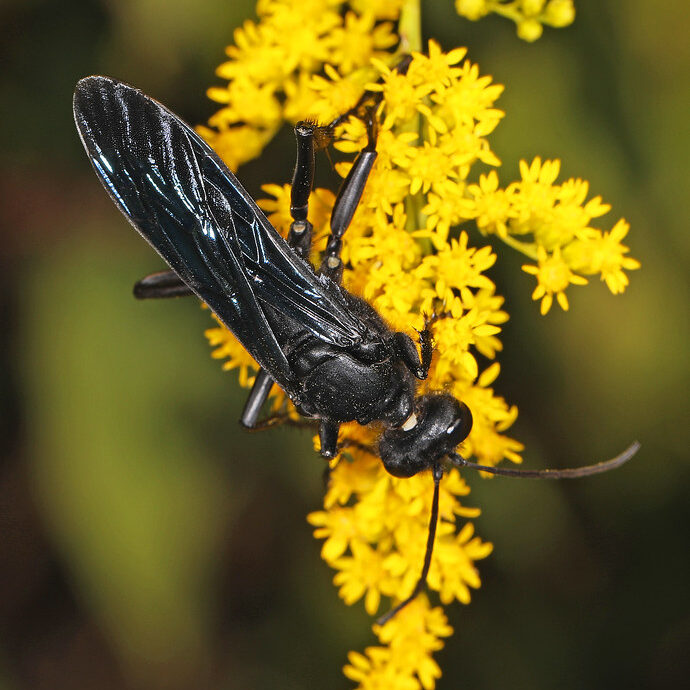
- Black body with many fine hairs
- Dark blue to black wings held together at rest
Biology and Habits
Great black wasps are solitary wasps and are rarely aggressive, but can sting if disturbed. Females dig branching tunnels up to a foot deep in sandy soils to construct cells. Each cell is provisioned with several paralyzed katydids and an egg. Great black wasps are a natural source of pest control for katydids and grasshoppers as well as pollinators of several plants including milkweed, carrot, and beans.
Control
Great black wasps rarely become a nuisance and control is not recommended. In situations where populations become too large, individual nests can be treated to kill developing larvae and adults. However, as these wasps are beneficial insects, it is best to leave them alone.
Need help identifying or controlling this pest? Give Revolution Pest Defense a call or send an email for a free inspection.
Great Black Wasp. Missouri Department of Conservation. (n.d.). https://mdc.mo.gov/discover-nature/field-guide/great-black-wasp