
Spider Wasp
Scientific Name
Family Pompilidae
Size
1/4 – 1 3/4″
Key Features
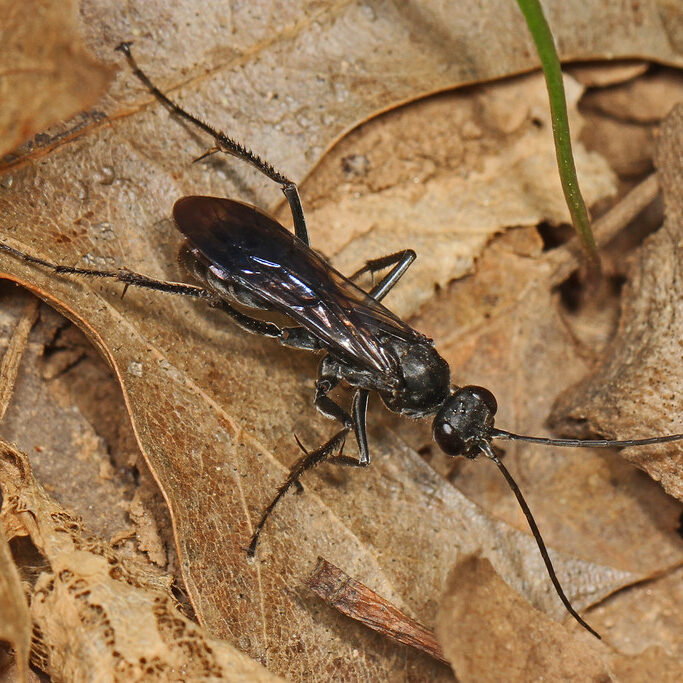
- Black or dark blue
- Black or blueish wings, sometimes orange
- Wings not folded at rest
- Long legs, extending beyond abdomen
Biology and Habits
Spider wasps are solitary and are not typically aggressive, however they can inflict a painful sting if disturbed. Female wasps sting and paralyze spiders and enclose them within a cell in the ground or other cavity along with a single egg. Some species will utilize an existing spider burrow. Adult wasps can be seen around flowering plants or on the ground in search of prey.
Control
Control of spider wasps is not recommended. While they occasionally come in contact with people or pets, they rarely do so in numbers large enough to warrant treatment. If populations become large, it is often more effective to control the spiders rather than the wasps.
Need help identifying or controlling this pest? Give Revolution Pest Defense a call or send an email for a free inspection.