
Mining Bee
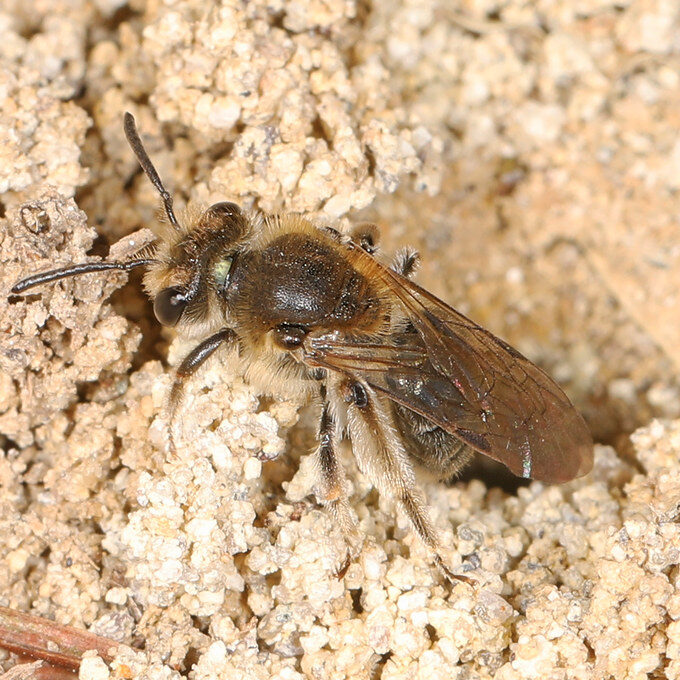
Scientific Name
Family Adrenidae
Size
1/8 – 3/4″
Key Features
- Dark brown to black
- Some species with pale hairs
Biology and Habits
Mining bees are a large group of small solitary bees that nest in the ground. They may be found in large aggregations around loose soil or sandy areas, creating small tunnels in the ground, where each cell is provisioned with pollen and nectar. Females are capable of stinging, but rarely do so. Mining bees are excellent pollinators and play a role in pollinating many early blooming plants, including cherry, apple, blueberry, and other flowering plants.
Control
While these bees are not normally a cause for concern, occasionally they may nest in areas frequented by people or pets. Common locations include soil garden beds, sandboxes, playgrounds, and occasionally in bare areas in yards. Control is discouraged unless populations become large and bothersome. Dusts or aerosols can be applied to the entrance of the nest to eliminate adults and larvae. Eliminating bare-ground areas will discourage bees from returning the following year.
Need help identifying or controlling this pest? Give Revolution Pest Defense a call or send an email for a free inspection.
Smith, E. H., & Whitman, R. C. (1992). NPCA Field Guide to Structural pests. NPCA.
Smith, L. J. (n.d.). Pollinator Profile: Mining Bees (Andrena sp..). Polinator.org. https://pollinator.org/pollinator.org/assets/globals/Pollinator-Partnership_Pollinator-profile_Mining-bees.pdf