
Carpenter Bee
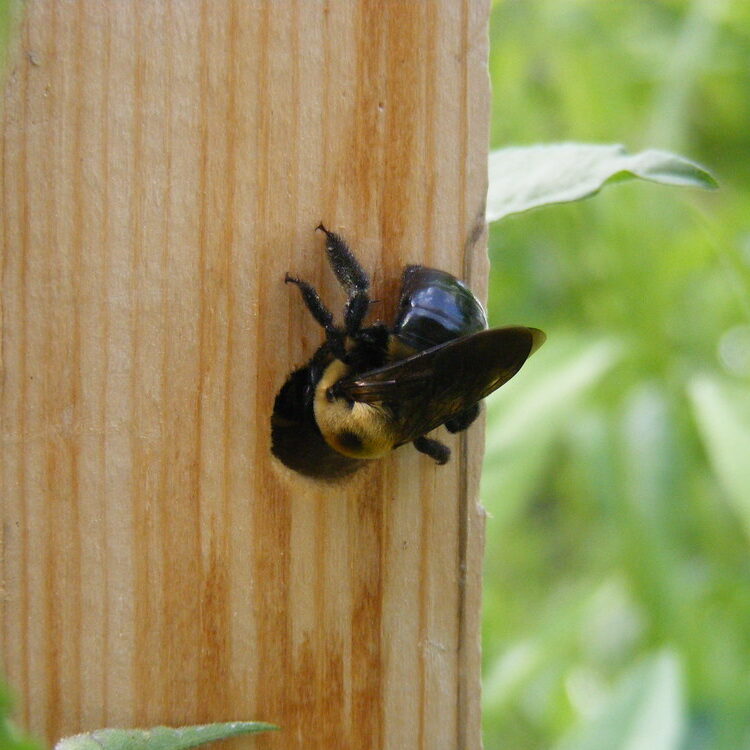
Scientific Name
Xylocopa spp.
Size
1/2 – 1″
Key Features
- Similar in appearance to a bumblebee
- Black abdomen without hairs
- Males with a white patch across the face
Biology and Habits
Carpenter bees are solitary and do not form colonies like bumblebees. Females will bore a 3/4 inch hole in unpainted wood and then makes a 90 degree turn parallel with the grain. Galleries are normally around 4-6 inches in length. Females may reuse old galleries, extend new tunnels in old galleries, or create new ones entirely. Each gallery cell is provisioned with pollen, nectar, and an egg. She will create 5-6 cells per gallery. Adults overwinter inside the galleries and emerge in the spring to mate and begin the cycle anew.
While females are capable of stinging, they are not aggressive. Males will aggressively defend the galleries by buzzing threats such as other bees or people, however they cannot sting.
Control
Control is achieved by dusting or using an aerosol in each gallery entrance. Galleries can be closed after several days to allow the adults proper exposure to the pesticides. A repellent residual pesticide can be applied to the wood to discourage females from boring new holes. Painted wood is generally unattractive to females and can be done as a non-chemical means of control.
Need help identifying or controlling this pest? Give Revolution Pest Defense a call or send an email for a free inspection.