
Smaller Carpenter Ant
Scientific Name
Camponotus nearcticus
Size
1/7 – 1/3″
Key Features
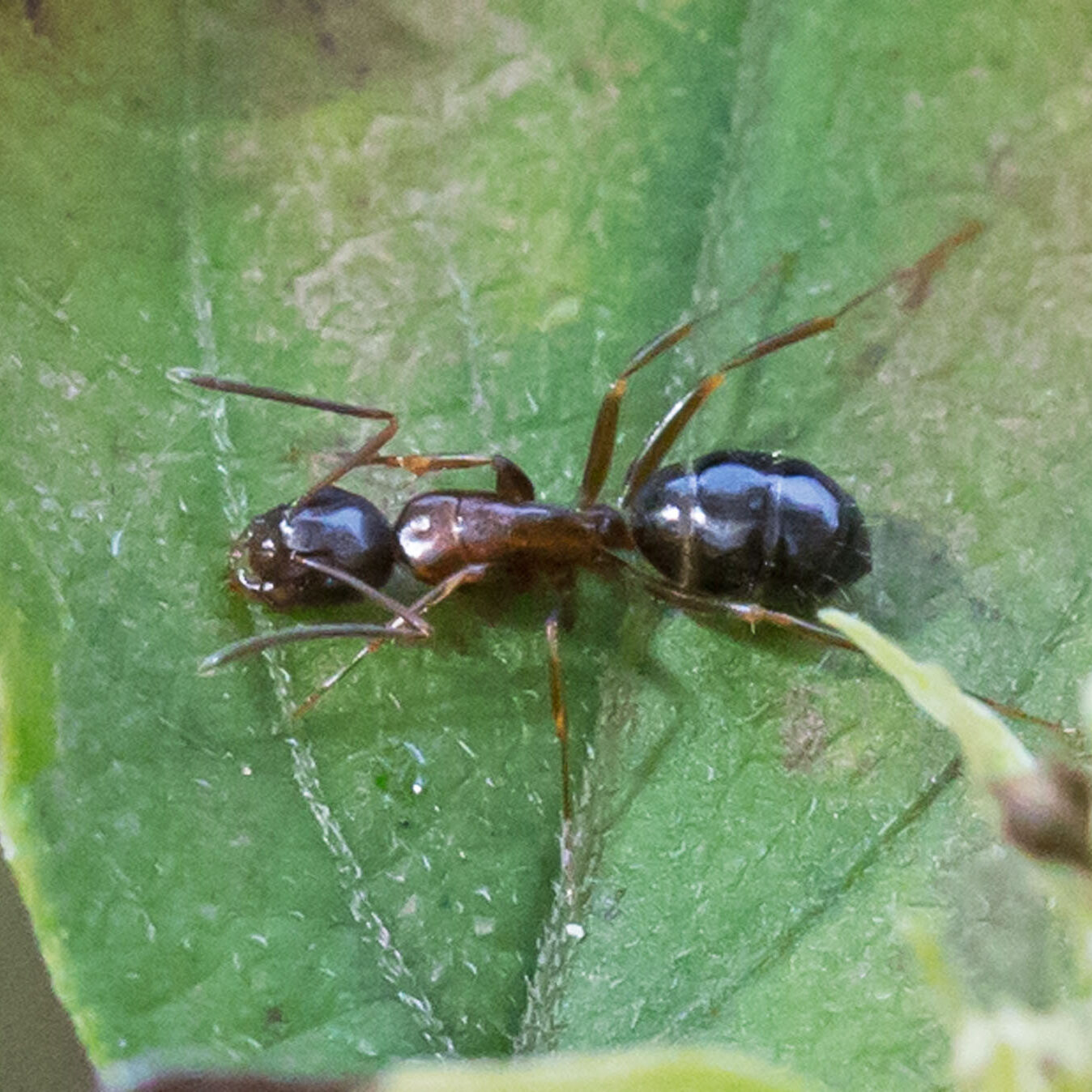
- Dark brown to black body
- Some populations with reddish thorax
Biology and Habits
Smaller carpenter ants produce colonies consisting of a queen and workers. Swarmers are produced in the fall and begin mating in the spring. Colonies are relatively small and can vary between 200-500 individuals. Smaller carpenter ants nest in moisture damaged wood, including old trees, sheds, wooden playgrounds, firewood piles, and window frames. Like other species of carpenter ants, colonies will excavate wood and leave behind “frass” or sawdust-like material. Activity peaks during the night, but ants can be seen foraging at all times of the day.
Control
Damage caused by these ants is generally less significant compared to larger carpenter ant species. Since this species does not readily infest homes, colonies should be left alone when they are discovered outdoors. If a colony has established itself in a home, building, or otherwise undesirable location, control may be warranted. Direct treatment of the nest with an appropriately labeled aerosol or liquid insecticide can quickly eliminate the colony. Baits labeled for carpenter ants can also be effective. Removal of moisture damaged wood can eliminate current or potential nesting sites.
Need help identifying or controlling this pest? Give Revolution Pest Defense a call or send an email for a free inspection.
Castillo Bravo, P., & Carlton, C. E. (n.d.). Camponotus nearcticus, Small Carpenter Ant (Hymenoptera: Formicidae). LSU AgCenter. https://www.lsuagcenter.com/articles/page1669926061865