
Millipede
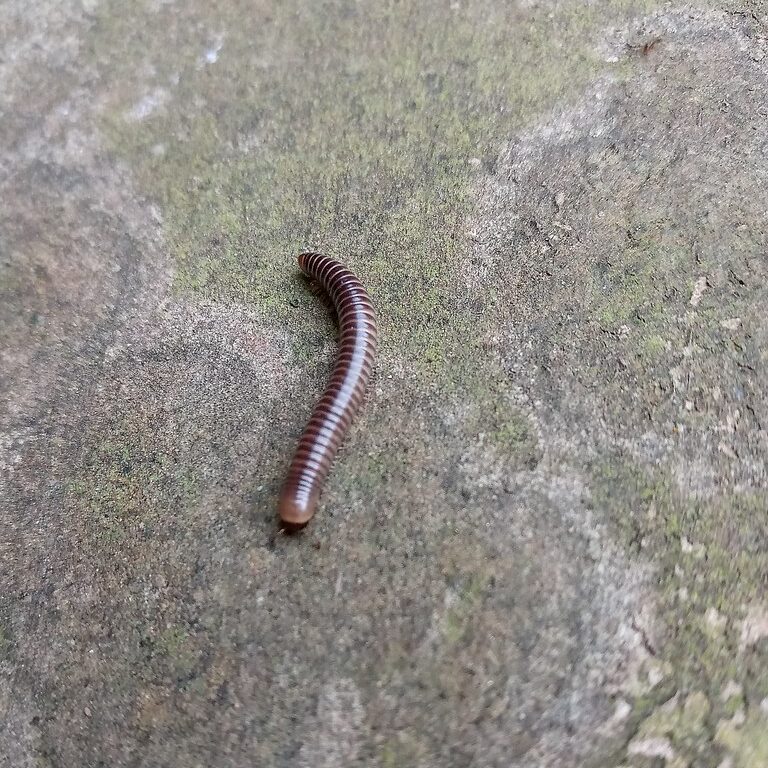
Scientific Name
Class Diplopoda
Size
1/16 – 4 1/2″
Key Features
- Cylindrical body with many segments
- Two pairs of legs per segment
Biology and Habits
Illinois is home so several species of millipedes. Females lay between 20-300 eggs in soil or decaying material and adults can live for several years. Their preferred habitat is in areas of high moisture, including in decaying vegetation, leaf litter, mulch, and grass clippings. Millipedes are scavengers, feeding on organic material such as decaying plants, dead insects, worms, snails, and even their own molted skins. In late fall, large accumulations of millipedes can occur around buildings. They may begin to migrate inside in great numbers, but they do not survive indoors due to the lack of required moisture and food source.
Control
Elimination of high moisture buildup in outdoor environments is the most effective way to reduce millipede populations. Keep lawns cut short and watered early in the morning. Remove debris from around the perimeter, especially old leaves and grass clippings. Indoors, keep crawlspaces and basements low in humidity and with adequate ventilation to eliminate damp areas. If chemical control is required, an appropriately labeled liquid insecticide can be applied along the foundation of the building and around flower and mulch beds. Control can be very difficult during migration periods.
Need help identifying or controlling this pest? Give Revolution Pest Defense a call or send an email for a free inspection.
Smith, E. H., & Whitman, R. C. (1992). NPCA Field Guide to Structural pests. NPCA.