
Larder Beetle
Scientific Name
Dermestes lardarius
Size
1/4 – 1/3″
Key Features
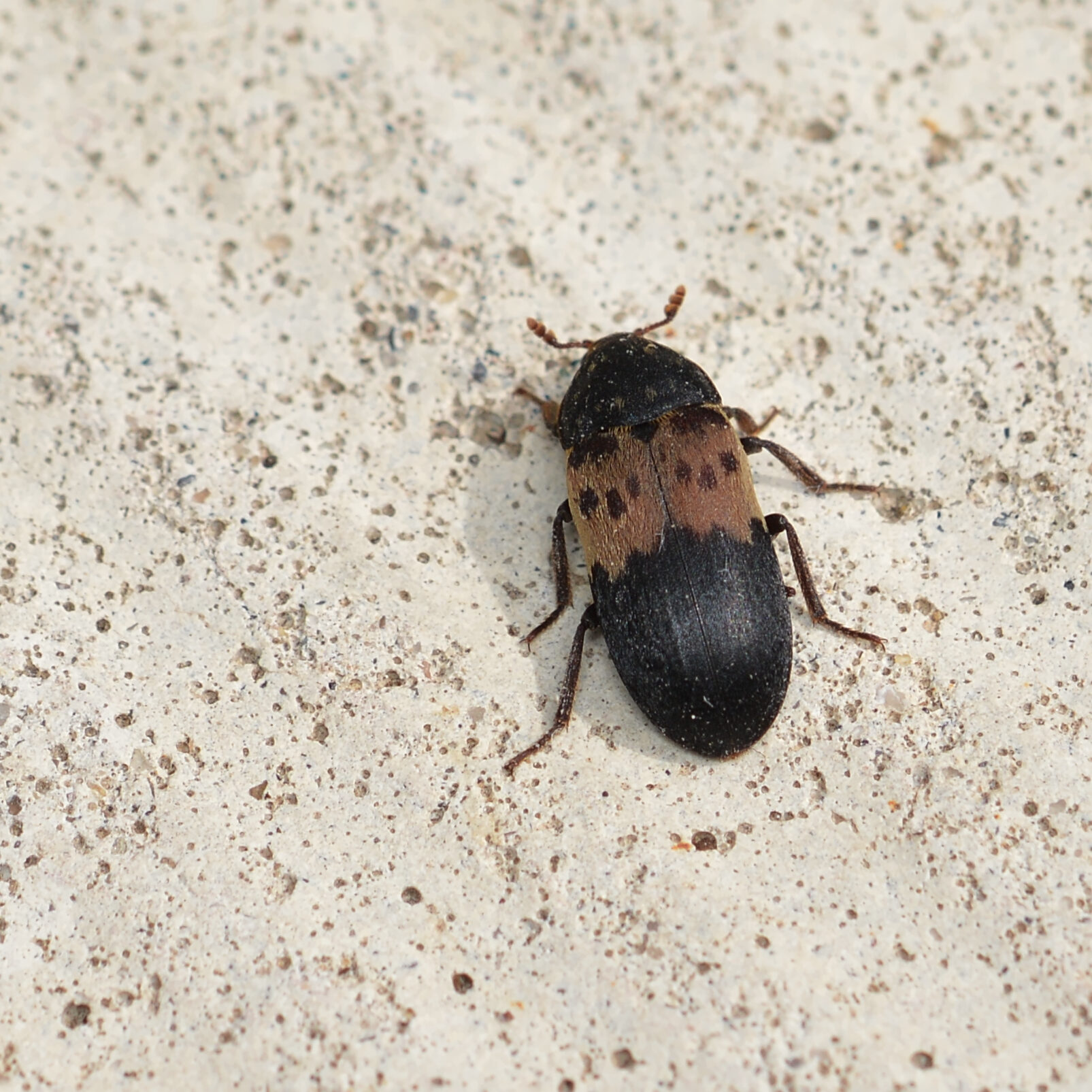
- Dark body with cream or brown band and 6 dark spots
- Oval body
- Hairy, reddish brown larvae
Biology and Habits
Adult larder beetles lay their eggs on food sources. Both the adults and larvae feed on high protein materials, including dead animal fur, skins, feathers, cured meats, cheeses, dead insects, and dry pet food. They can be a particular problem after an infestation of rodents or insects in the walls.
Control
Larder beetles are best controlled by eliminating their food source. In some instances, their presence may suggest a rodent infestation as they will feed on the bodies of dead mice and rats. Rodent control is recommended if evidence is found indoors. Remove dead insects in basements and crawlspaces to eliminate potential food sources. If their food source is within walls or ceilings, it may be difficult to achieve control. Insecticidal sprays are not recommended for the interior of homes and buildings, however an appropriately labeled insecticide applied to the exterior perimeter can be effective, particularly before the beetles attempt to overwinter in the fall. Applying dust in wall voids can also provide relief.
Need help identifying or controlling this pest? Give Revolution Pest Defense a call or send an email for a free inspection.
Hahn, J., & Kells, S. (n.d.). Larder beetles. UMN Extension. https://extension.umn.edu/product-and-houseplant-pests/larder-beetles