
Acrobat Ant
Scientific Name
Crematogaster spp.
Size
1/16 – 1/8″
Key Features
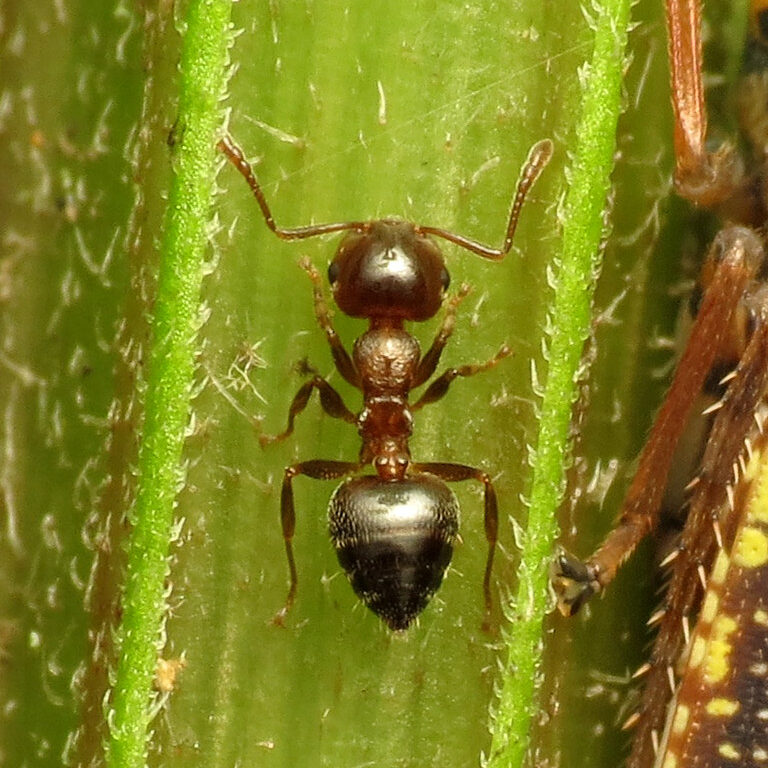
- Heart shaped abdomen
- Petiole with 2 nodes
Biology and Habits
Colonies of acrobat ants consist of a single queen and her workers. Swarmers emerge mid June to late September. Acrobat ants typically nest in damaged trees, under rocks, or in old termite and carpenter ant galleries. Indoors, they can nest in moisture damaged wood and foam insulation. Workers enter homes through weepholes, cracks in foundation, around window frames, and through utility lines. These ants can be aggressive when the nest is disturbed and are capable of stinging and emitting a foul odor.
Control
Acrobat ants can be controlled by locating the nest and directly treating it with an appropriately labeled liquid, dust, or aerosol pesticide. To locate a nest, inspect for bits of wood or insulation that have been excavated from the walls and deposited on the floor. Outdoors, search under rocks or wood piles. Trails of workers will often lead directly to the nest. The exterior of the home can be treated to prevent entry by foraging ants. Since acrobat ants are uncommon and usually mistaken for other species of ants, homeowners may attempt to use baits to control them, however baits are ineffective.
Need help identifying or controlling this pest? Give Revolution Pest Defense a call or send an email for a free inspection.
Bennett, G. W., Owens, J. M., & Corrigan, R. M. (2014). Truman’s Scientific Guide to Pest Management Operations (Seventh). North Coast Media, LLC.