
Box Elder Bug
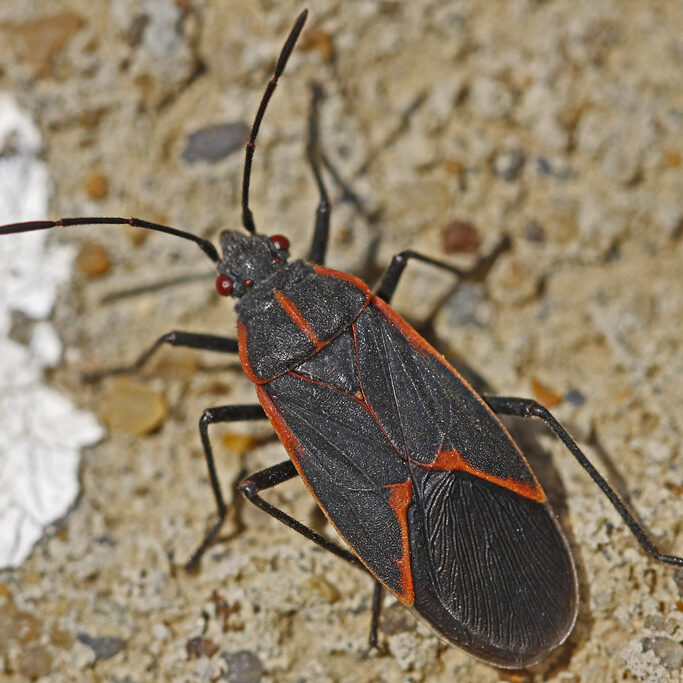
Scientific Name
Boisea trivittata
Size
1/2”
Key Features
- Black color with red margins on wings and pronotum
- Piercing-sucking mouthparts
Biology and Habits
Adult females lay eggs on stones, logs, trees, and plants in the spring. After hatching, nymphs feed on box elder seeds. Adults feed on fallen seeds and leaves of female box elder trees. They may also feed on silver maple trees or the fruits of plum and apple trees. In the fall, box elder bugs congregate in large numbers on warm, southern surfaces of rocks, trees, and houses or buildings, and will enter through cracks and crevices, around utility lines, light fixtures, or attic ventilation. They frequently fly through open doors and windows they are congregated near. During warm, sunny days in winter and spring, box elder bugs may awaken and emerge from their hibernation into living spaces. Although they are primarily a nuisance, they may leave red stains from their fecal matter.
Control
Need help identifying or controlling this pest? Give Revolution Pest Defense a call or send an email for a free inspection.
Smith, E. H., & Whitman, R. C. (1992). NPCA Field Guide to Structural pests. NPCA.