
Bumble Bee
Scientific Name
Bombus spp.
Size
1/4 – 1″
Key Features
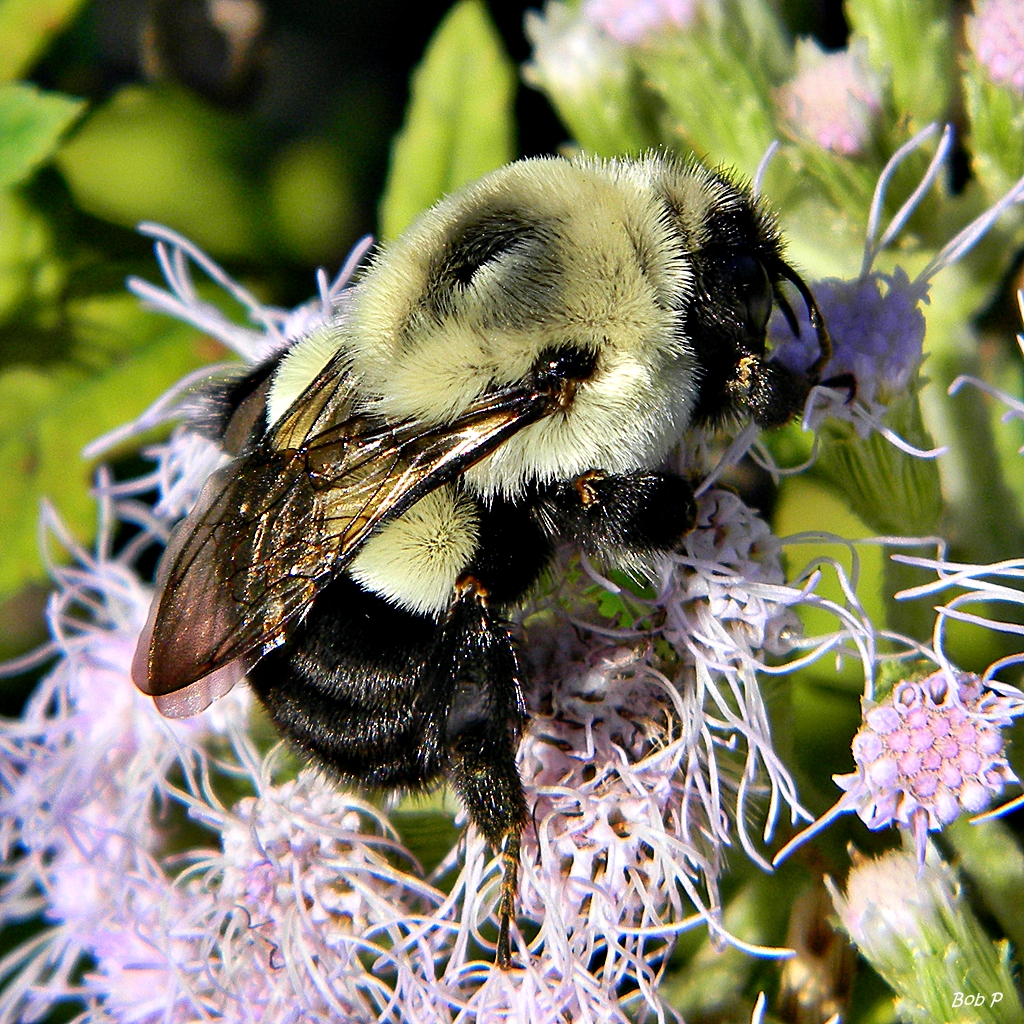
- Robust body covered in hairs
- Yellow and black, sometimes orange
Biology and Habits
Bumble bees are social insects forming colonies consisting of a queen, infertile workers, and males. Colony size varies between 50-500 workers, depending on species and other factors. Queens emerge from their hibernation and seek out a suitable location to build a nest, often underground in old rodent burrows or under clumps of grass clippings. She constructs a wax honey pot filled with nectar and raises her first batch of workers before turning full time to egg laying. Late in the season, males and new queens are produced and mate. The new queens will hibernate underground while the rest of the colony dies.
Bumble bees are capable of stinging multiple times and will readily attack a perceived threat to the nest.
Control
Bumble bees are beneficial pollinators and should not be controlled unless they come in potential contact with people or animals. In situations where control is warranted, treat the entrance of the nest with an appropriately labeled dust or aerosol. If the nest is located in a structure, do NOT close the entrance as bees may find their way into the living space.
Need help identifying or controlling this pest? Give Revolution Pest Defense a call or send an email for a free inspection.