
Vole
Scientific Name
Microtus spp.
Size
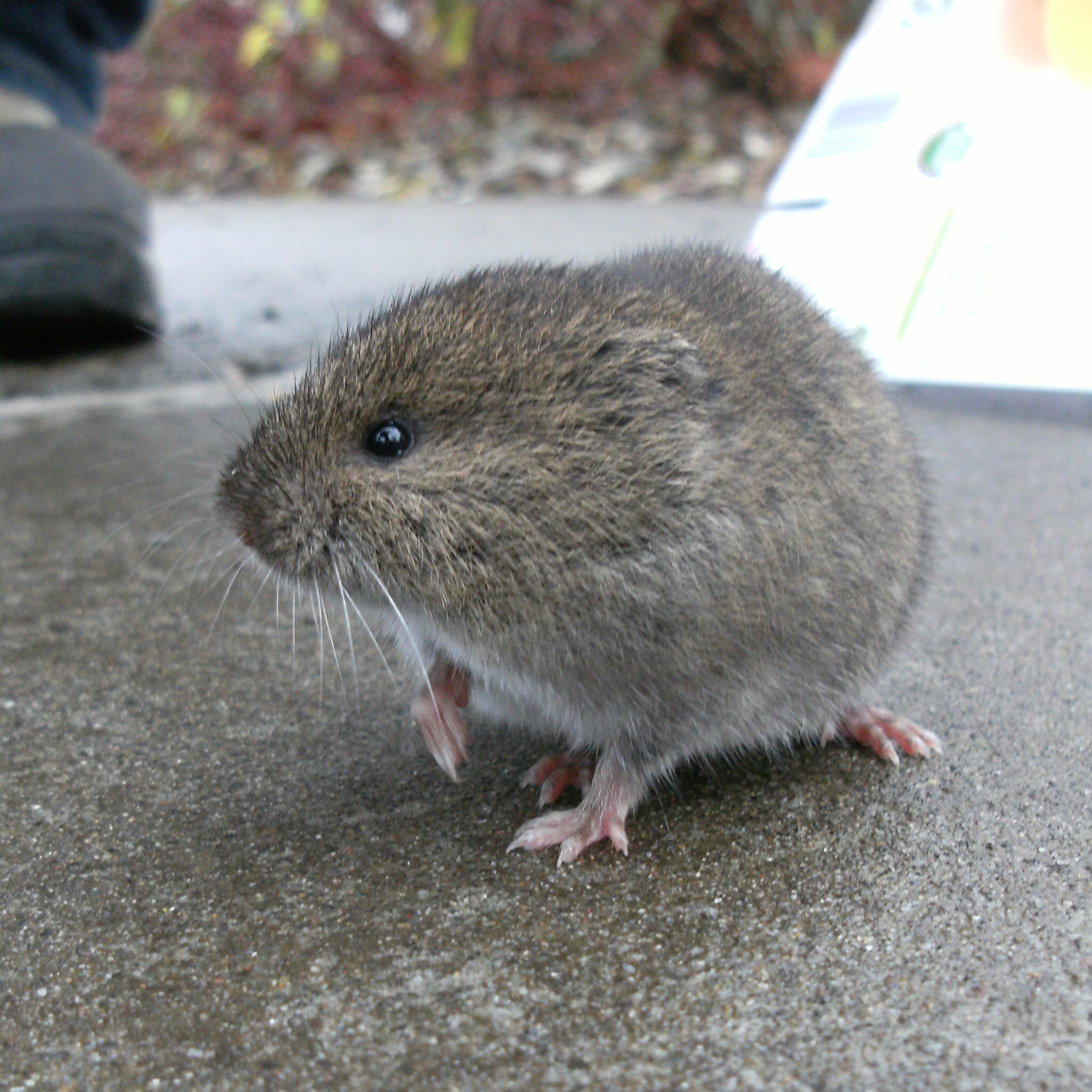
7″
Key Features
- Small eyes and ears
- Chestnut brown with black fur
- Dark brown belly
- Brown feet
- Short tail, approximately 1 1/2″
Biology and Habits
Voles produce 5-10 litters per year with an average of 5 young. They are capable of breeding after a month or two and gestation period lasts approximately 21 days. Their diet primarily consists of grasses and herbs. Voles can be destructive to vegetation and ornamentals as they may chew on stems and bark, damaging or killing plants. This destruction of plants may sometimes warrant control.
Control
Although voles are usually harmless, they can sometimes be destructive to grass and ornamentals. They can be controlled outdoors with snap traps or baits placed on or near their runways. If runways cannot be identified, place traps or bait near plants with evidence of damage from voles. Keep lawns and vegetation cut to a short length to discourage travel and harborage.
Voles very rarely enter homes and buildings. When they do, they are often found in basements and lower levels but, unlike mice or rats, they do not establish nests or breeding populations. Indoors, voles are best controlled using snap traps.
Need help identifying or controlling this pest? Give Revolution Pest Defense a call or send an email for a free inspection.
Bennett, G. W., Owens, J. M., & Corrigan, R. M. (2014). Truman’s Scientific Guide to Pest Management Operations (Seventh). North Coast Media, LLC.