
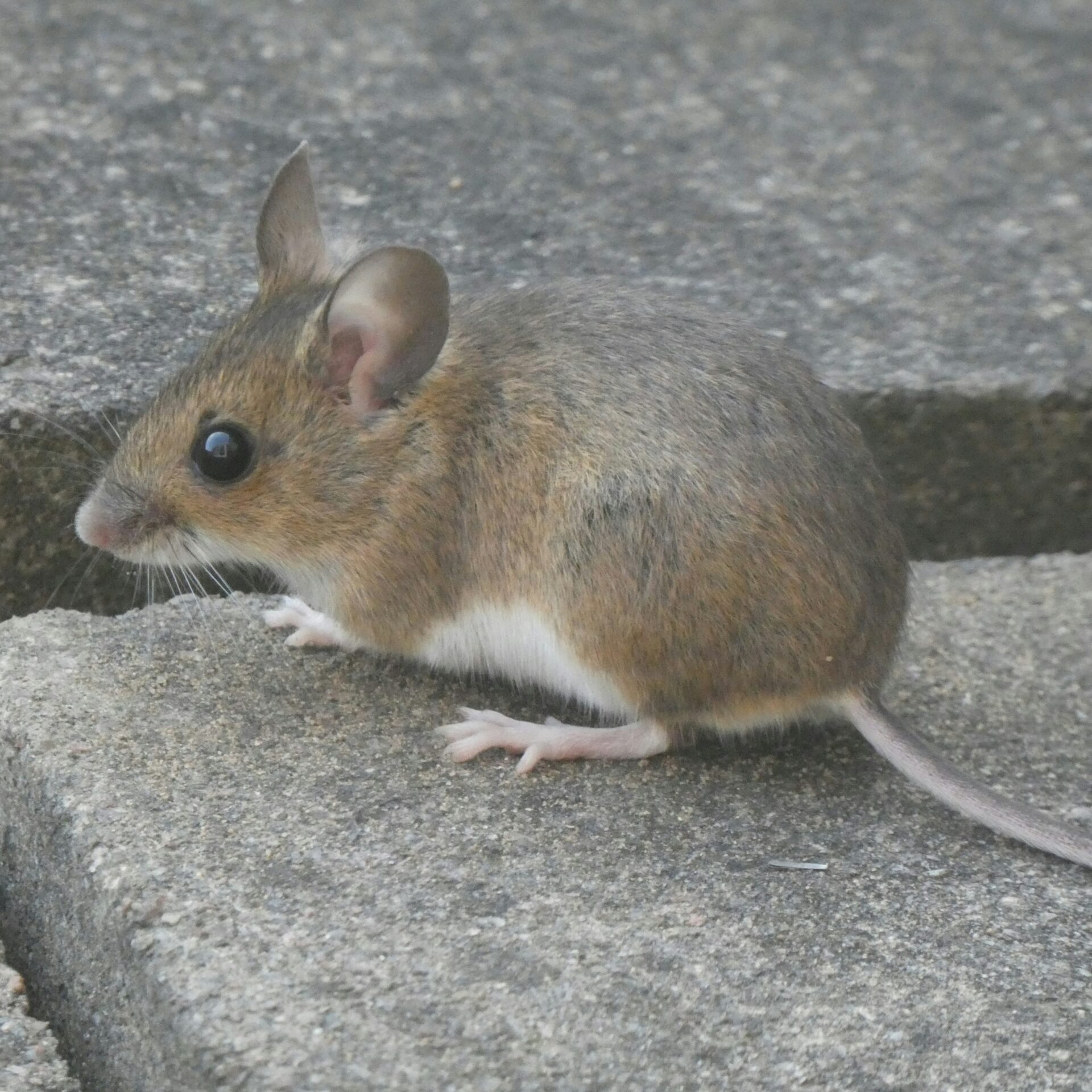
Field Mouse
Scientific Name
Peromyscus spp.
Size
2 3/4 – 4″
Key Features
- Brown fur with white belly.
- Large eyes and ears.
- Tail longer than half length of the body.
Biology and Habits
Field mouse is a common name for species of deer mice and white footed mice. Field mice produce 2-4 litters per year with an average of 3-5 young. Breeding occurs around 5-6 weeks and the gestation period lasts for approximately 21-24 days. The average lifespan of a wild mouse is 2-24 months due to predation, but they can live longer in captivity. Mice are most active at night, but can be seen during the day, especially when populations are high. They are excellent climbers and will travel between 10 – 30 feet from their nest, depending on population density. Unlike house mice, field mice do not have established runways. Deer mice are of medical importance as they are carriers of the hantavirus.
While mice may infest homes during the warmer months, they are most often seen indoors in the fall and winter. As their natural food source becomes scarce and the temperature drops, they may move inside to establish a nest. Well adapted to any environment, mice can nest in just about any suitable location; ceiling and wall voids, behind appliances, in wood piles, sheds, garages, attics, etc. As omnivores, they have a wide variety of food they may feed on, including seeds, grains, insects, and even human and pet food.
Control
Field mice are effectively controlled through a variety of methods. With existing indoor infestations, snap traps or bait are effective means of control, however it is important to ensure that bait is placed in tamper proof containers to prevent access by non target organisms, people, and pets. Exterior control can also be achieved with baits and traps, however, success is more limited, particularly on properties near fields and wooded areas.
Where possible, exclusion is effective in preventing entry into the structure. Sealing up openings with hardware cloth, steel wool, spray foam, or other means will effectively block access. Look for areas where pipes, conduits, or wires enter the home, under siding, around worn out door or window frames, or areas where additions to a home or building meet the original construction. Unfortunately, there are many situations where exclusion is not realistic, either due to cost of repair or location of the opening. For example, many mice gain access to homes from inaccessible entry points located under decks.
Need help identifying or controlling this pest? Give Revolution Pest Defense a call or send an email for a free inspection.
Bennett, G. W., Owens, J. M., & Corrigan, R. M. (2014). Truman’s Scientific Guide to Pest Management Operations (Seventh). North Coast Media, LLC.