
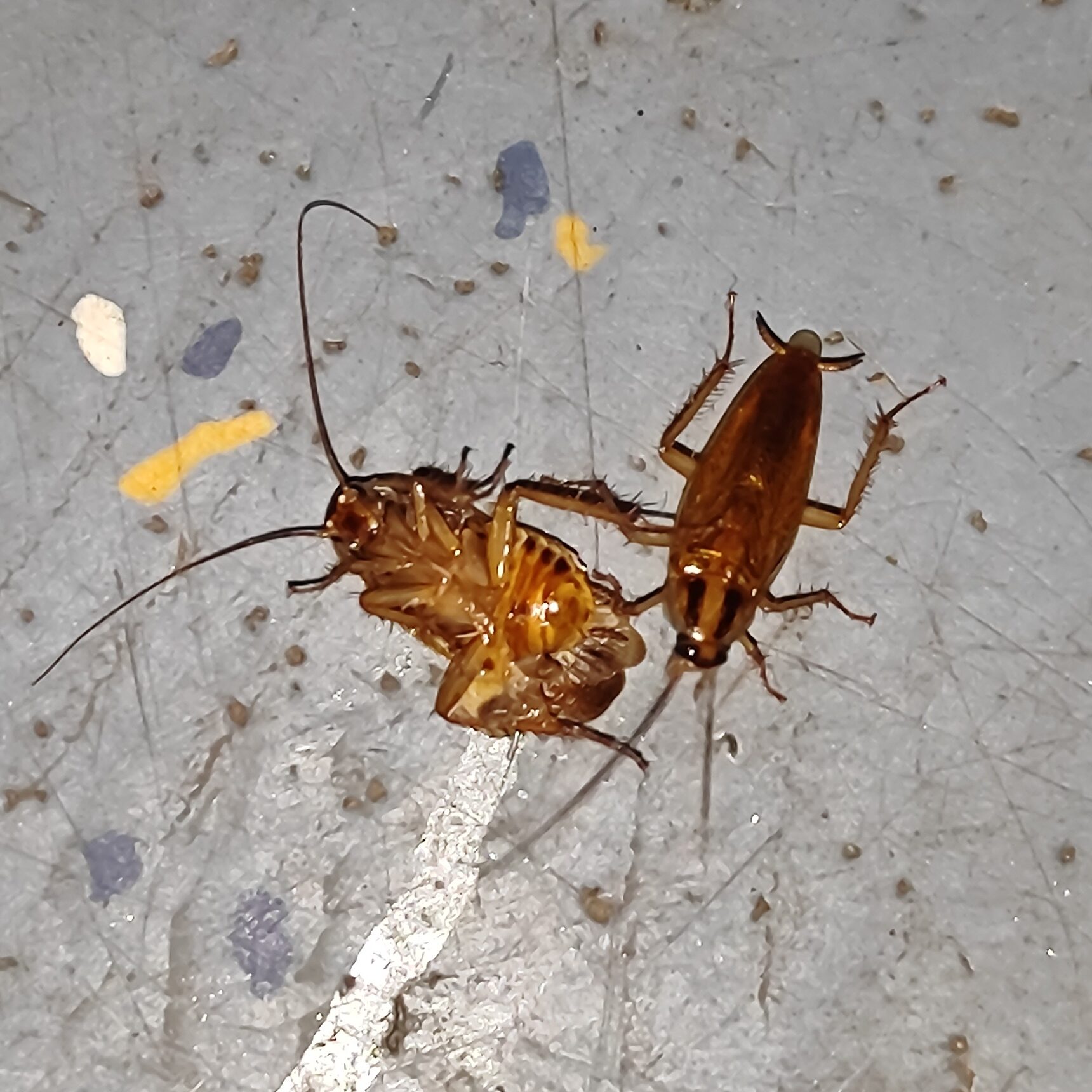
German Cockroach
Scientific Name
Blattella germanica
Size
1/2 – 5/8″
Key Features
- Two dark longitudinal stripes on thorax
- Light brown body
- Yellowish brown, purse shaped egg capsule
Biology and Habits
German cockroaches are gregarious insects, capable of quickly building large populations. Females produce an average of 5 egg capsules containing between 30-40 eggs each. Adults live between 100-200 days, with up to 6 generations of cockroaches per year under optimal conditions. German cockroaches are found in a wide range of places, including kitchens, bathrooms, basements, bedrooms, or any location with suitable food, water, and temperature. Like other species of cockroaches, they seek out tight cracks or gaps to hide in. Cardboard, stacks of paper, motor housing in appliances, behind baseboards, light fixtures, or outlets are common areas where individuals may be found. German cockroaches are “hitchhikers” and can quickly spread from one location to another by being carried on clothes, backpacks, lunch bags, or luggage. Although German cockroaches typically forage at night, they may be active throughout the day and this may indicate the presence of a severe infestation. Outdoor infestations are uncommon due to their inability to survive the cold winter months.
German cockroaches are the most economically important cockroach pest in Illinois and they have been implicated in a number of health issues. They often harbor in unsanitary places and will spread germs to food, utensils, napkins, cups and plates, and cooking surfaces, potentially causing digestive illnesses. Additionally, the droppings and cast skins of cockroaches contain proteins which can cause allergic reactions in some people, particularly those with asthma.
Control
Due to their potential for causing health issues and creating large infestations, control of German cockroaches is often a high priority. In commercial settings, particularly in kitchens and food plants, auditors may require total elimination and an active maintenance plan to prevent reinfestation. Monitoring is an important asset for prevention. Sticky traps should be used around potential harborage sites, including inside of motor housing, around appliances, pipe chases, behind cabinet doors, or near baseboards. When a German cockroach has been properly identified, a multifaceted approach should be used to account for potential resistance. Baits are particularly effective when applied according to the label. It is good practice to cycle through baits with different active ingredients or modes of action every few months or if populations are not decreasing. For voids behind walls or around live wires, dusts are effective in achieving proper coverage. Aerosols may be used as a flushing agent and a quick kill to eliminate pockets of roaches in hard to reach places. Liquid pesticides also provide good control when used according to the label, but care should be used to avoid contaminating bait. Insecticides with an insect growth hormone (IGR) are effective in disrupting the molting or sexual reproduction of cockroaches.
While chemical control is usually required for German cockroaches, it should always be used in conjunction with good sanitation practices. Removal of old cardboard and paper material will help eliminate harborage. Cleaning dishes, kitchen surfaces, and regularly disposing of garbage and cleaning garbage bins is an effective way to prevent infestation, but also to eliminate food competition, making baits more effective against current populations.
Need help identifying or controlling this pest? Give Revolution Pest Defense a call or send an email for a free inspection.
Bennett, G. W., Owens, J. M., & Corrigan, R. M. (2014). Truman’s Scientific Guide to Pest Management Operations (Seventh). North Coast Media, LLC.