
Honey Bee
Scientific Name
Apis mellifera
Size
1/2 – 5/8″
Key Features
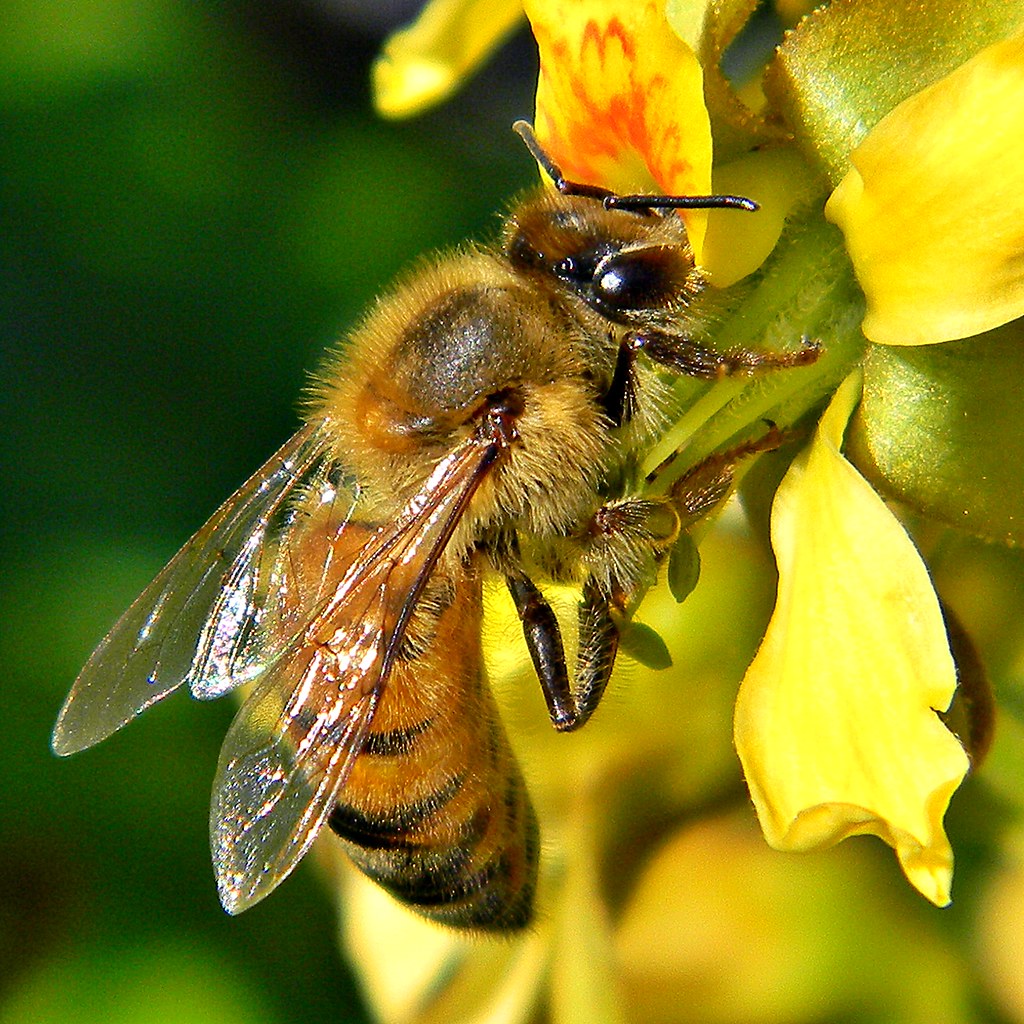
- Orangish brown body covered in dense hairs
- Enlarged and flattened hind leg
Biology and Habits
Honey bees are social insects forming colonies consisting of a queen, infertile workers, and drones. Colony size can be quite massive, reaching between 20,000 – 80,000 bees in a mature nest. Unlike other social bees and wasps in Illinois, the entire honey bee nest overwinters and survives into the next season. The queen lays 1,500 – 2000 eggs daily and can live up to 5 years. When the queen dies or the colony grows too large, swarming can occur and new queens are produced. Workers live 5-7 weeks and are responsible for rearing young, building, foraging, providing ventilation, and other duties required by the colony.
While honey bees are not aggressive when foraging or in swarms, they will defend their nest from perceived threats. The nest entrance is patrolled by guard bees, who will sting and alert the colony of a threat. Unlike other bees and wasps, honey bees possess a barbed stinger. After inflicting a sting, the bee loses its stinger and organs, killing it in the process.
Control
Revolution Pest Defense does not treat for honey bees. If you have unwanted honey bees on your property, contact a local beekeeper for guidance. Often, colonies can be safely removed and relocated. In wall voids, the live colony may be extracted by cutting into the walls and removing the wax nest and bees. If the bees must be killed, the nest should be removed to prevent honey from seeping into the wood and walls, which can cause damage, leave an odor, and attract secondary pests such as mice, beetles, and moths.
Need help identifying this pest? Give Revolution Pest Defense a call or send an email for a free inspection.