
House Centipede
Scientific Name
Scutigera coleoptrata
Size
1 – 1 1/2″
Key Features
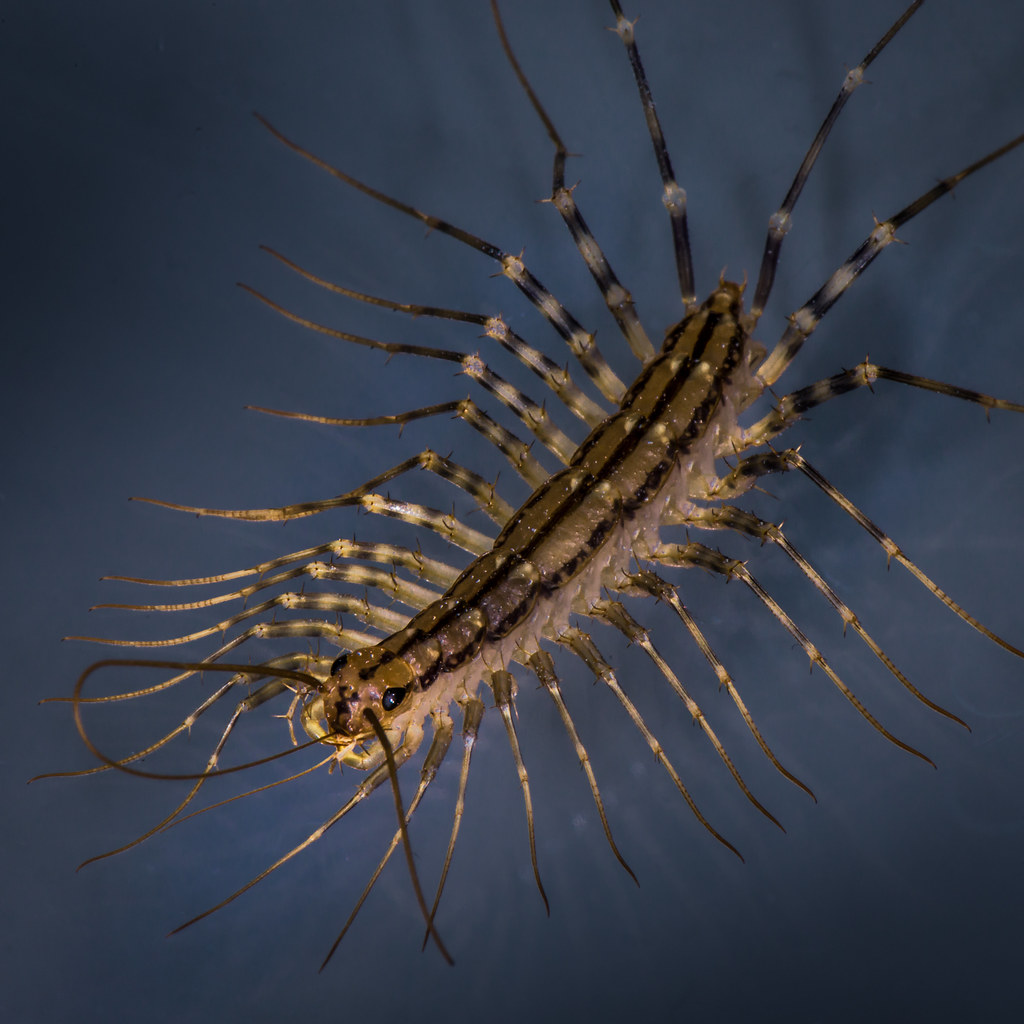
- Up 15 pairs of legs
- One pair of legs per body segment
- Yellowish-gray body and legs
- Three dorsal stripes and striped legs
Biology and Habits
House centipedes may live their entire lives inside a structure, often preferring damp and undisturbed areas. These areas include basements, crawlspaces, attics, closets, and bathrooms. Females lay their eggs in dark, damp areas, behind baseboards or under bark. They are most active at night, hunting other insects or spiders. While centipedes are capable of biting, their bites are fairly weak and do not pose any health concerns.
Control
Chemical treatment for house centipedes may involve a thorough exterior perimeter treatment as well as an interior treatment in the areas most affected. Dust can provide great control when used in cracks and voids. Outdoors, removal of debris around the home, including wood or leaves, will help eliminate potential harborage.
Need help identifying or controlling this pest? Give Revolution Pest Defense a call or send an email for a free inspection.
Bennett, G. W., Owens, J. M., & Corrigan, R. M. (2014). Truman’s Scientific Guide to Pest Management Operations (Seventh). North Coast Media, LLC.
Smith, E. H., & Whitman, R. C. (1992). NPCA Field Guide to Structural pests. NPCA.