
Oriental Cockroach
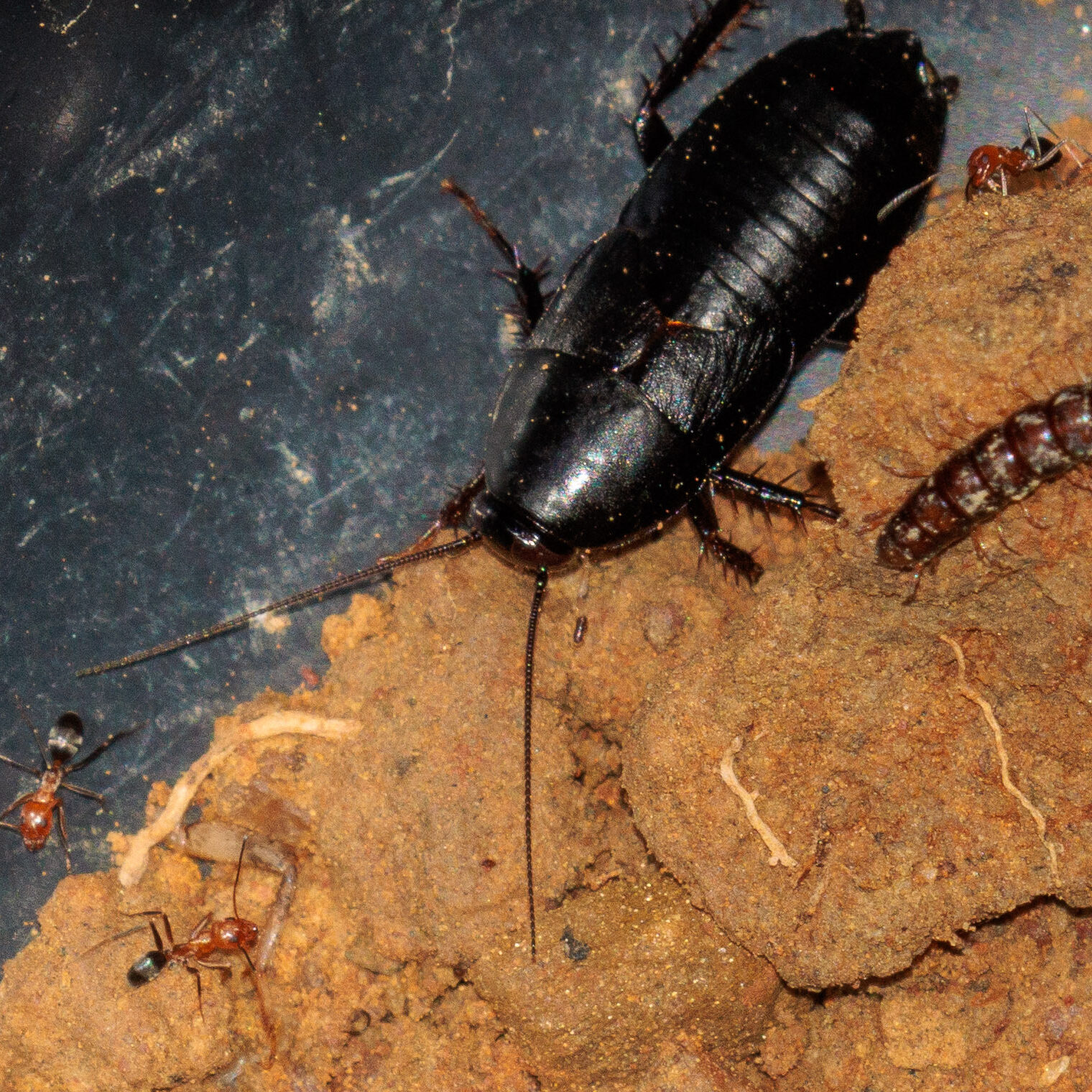
Scientific Name
Blatta orientalis
Size
1 – 1 1/4″
Key Features
- Shiny black to dark reddish brown body
- Males with abdomen partially exposed under wings
- Females with very small, vestigial wings
Biology and Habits
Female Oriental cockroaches produce an average of 8 egg capsules each containing about 16 eggs. Females live between 34-181 days and males live between 112-160 days. Development time from egg to adult is an average range of 575 to 602 days at average conditions. Oriental cockroaches spend most of their time outdoors near decaying organic material, under debris, leaf litter, rocks, dumps, mulch and in sewers and drains. They may enter homes or buildings through door thresholds, screens, or gaps around utility lines and pipes, especially when temperatures begin to drop or during periods of drought. When indoors, they are normally found on lower levels, basements, and crawlspaces. They are rarely found on upper levels or on countertops and in cabinets. Oriental cockroaches prefer to feed on decaying organic matter and starchy foods.
Control
Monitoring is an important asset for prevention. Sticky traps should be used around potential harborage sites, including pipe chases, near baseboards, and in basements near sewers and steam tunnels. Wettable powders, soluble concentrates, or microencapsulated insecticide sprays are effective, particularly on concrete in basements and utility rooms. Treat around drains with appropriately labeled insecticides. Baits are particularly effective when applied according to the label. For voids behind walls, dusts are effective in achieving proper coverage. Insecticides with an insect growth hormone (IGR) are effective in disrupting the molting or sexual reproduction of cockroaches. Exterior barrier treatments may be necessary for populations originating outdoors, especially when they begin migrating indoors due to temperature drops or drought. Spot treatments around exterior harborage areas provides good control.
Need help identifying or controlling this pest? Give Revolution Pest Defense a call or send an email for a free inspection.
Bennett, G. W., Owens, J. M., & Corrigan, R. M. (2014). Truman’s Scientific Guide to Pest Management Operations (Seventh). North Coast Media, LLC.