
Paper Wasp
Scientific Name
Polistes spp.
Size
5/8 – 3/4″
Key Features
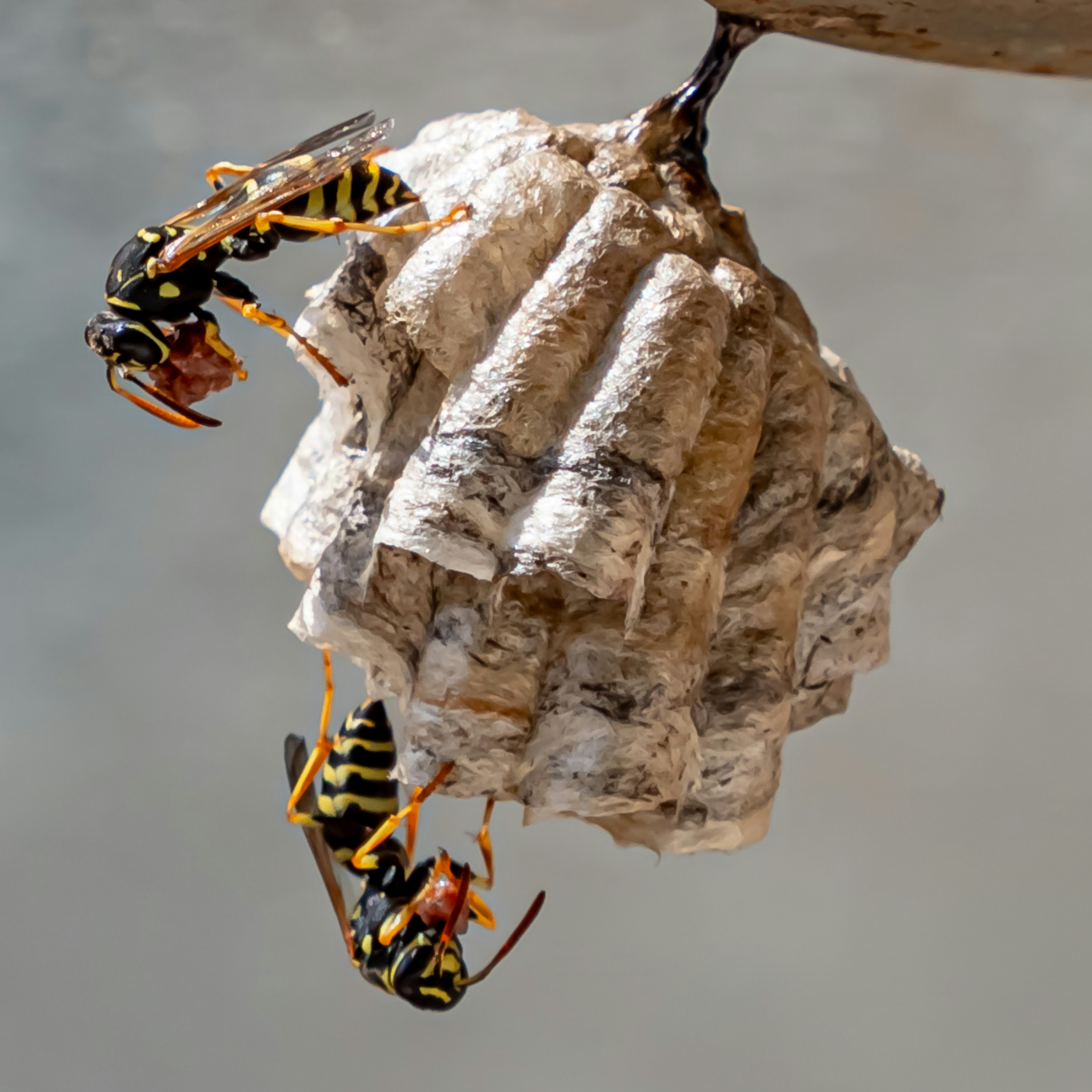
- Black and yellow banded abdomen
- Long legs
- Wings folded at rest.
Biology and Habits
Paper wasps are semi-social insects building small colonies consisting of one or more founding queens and their workers. The dominant queen assumes egg laying responsibilities, but should she die, another will take over. Nests are constructed using a mixture of saliva and wood pulp. They are built in upside down “umbrella nests” without a protective carton. Nests are attached by a stalk to branches, shrubs, and under overhangs. They can be built inside of vents, behind gutters, under umbrellas or outdoor furniture, and inside of light fixtures. At the end of the season, males are produced and will mate with females and only the newly inseminated females will survive through the winter. Often times, congregations of inseminated females may be spotted on structures in late fall as they prepare to find a suitable location to hibernate.
While they are relatively docile, they will aggressively defend their nest with a painful sting if disturbed.
Control
Due to their more relaxed nature compared to yellowjackets and hornets, most nests located away from people will not present any immediate danger. However, should a nest be located where people or animals come into contact, control may be necessary. An appropriately labeled aerosol or liquid pesticide can be carefully applied to the exposed nest to kill the adults. Once the colony has been eliminated, the nest can be safely removed if desired. During warm periods in the winter and spring, wasps may emerge from their hibernation spots and be found walking lethargically indoors. These do not indicate an active nest and treatment with an insecticide is not recommended.
Need help identifying or controlling this pest? Give Revolution Pest Defense a call or send an email for a free inspection.