
Pavement Ant
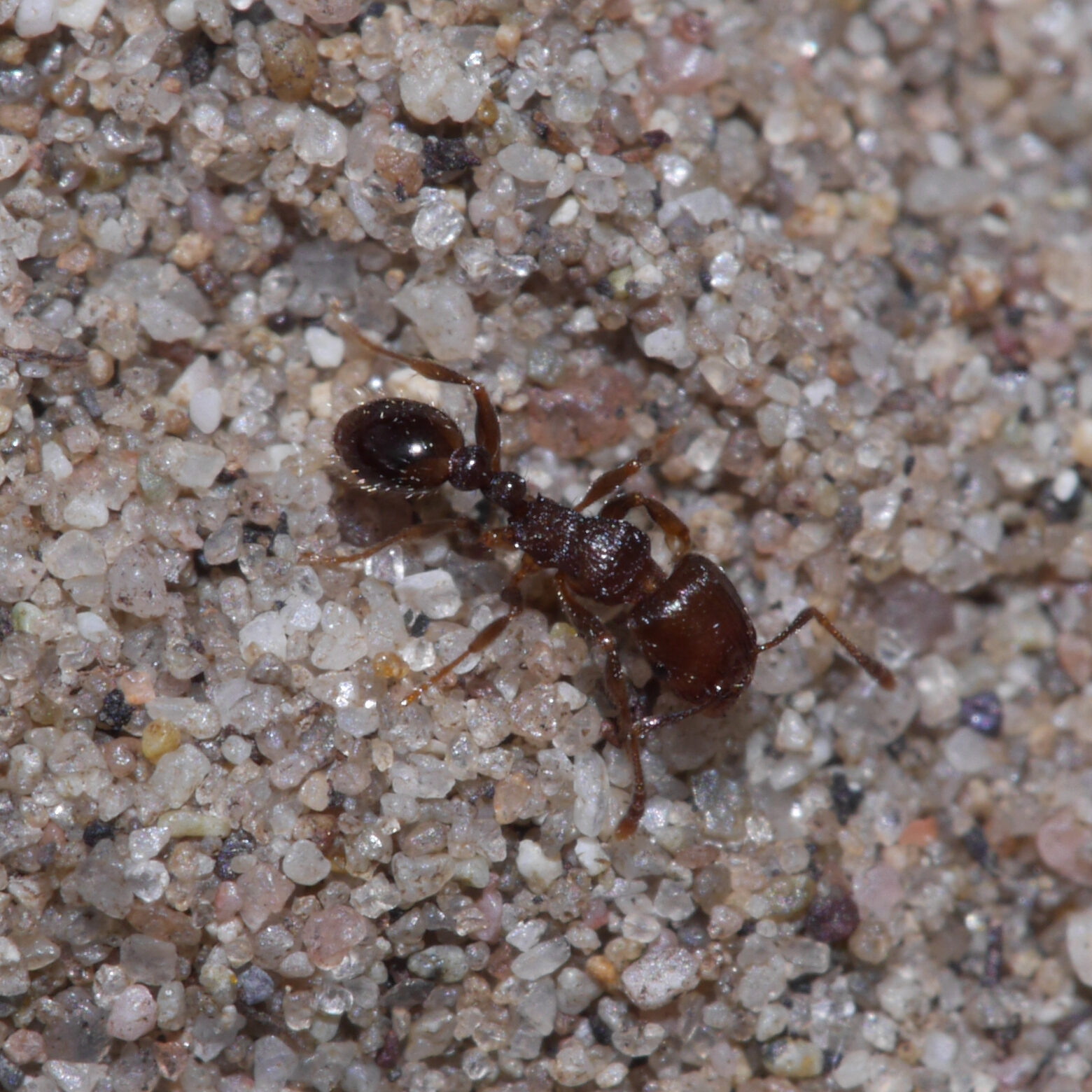
Scientific Name
Tetramorium caespitum
Size
1/16 – 1/8″
Key Features
- Brown to black body
- Petiole with 2 nodes
Biology and Habits
Pavement ants form large colonies consisting of a single queen and her workers. Swarmers appear in June and July, but may occasionally emerge indoors during the winter. Outdoors, these ants will nest under pavement, especially near sidewalks, walkways, and driveways. Indoors, pavement ants may establish nests under slabs, in crawlspaces, in insulation, or under floors. Worker ants may enter structures through any small crack. Ants found indoors during colder months usually indicate a nest inside. Pavement ants will forage up to 30 feet from a nest and prefer meats and greases, but will opportunistically feed on almost anything. Generally, they are slow moving and do not often climb onto countertops or tables.
Pavement ants are not aggressive, but are capable of stinging if their nest is disturbed.
Control
Pavement ants can be effectively controlled using baits, however this method takes several weeks and sometimes requires reapplication. If a nest can be located by following trails of workers, an appropriately labeled liquid or aerosol pesticide can be sprayed directly into the entrance. Barrier treatments on the exterior perimeter can prevent workers from entering homes to forage for food. Dust used in wall voids or under floors can also provide control.
Need help identifying or controlling this pest? Give Revolution Pest Defense a call or send an email for a free inspection.