
Pharaoh Ant
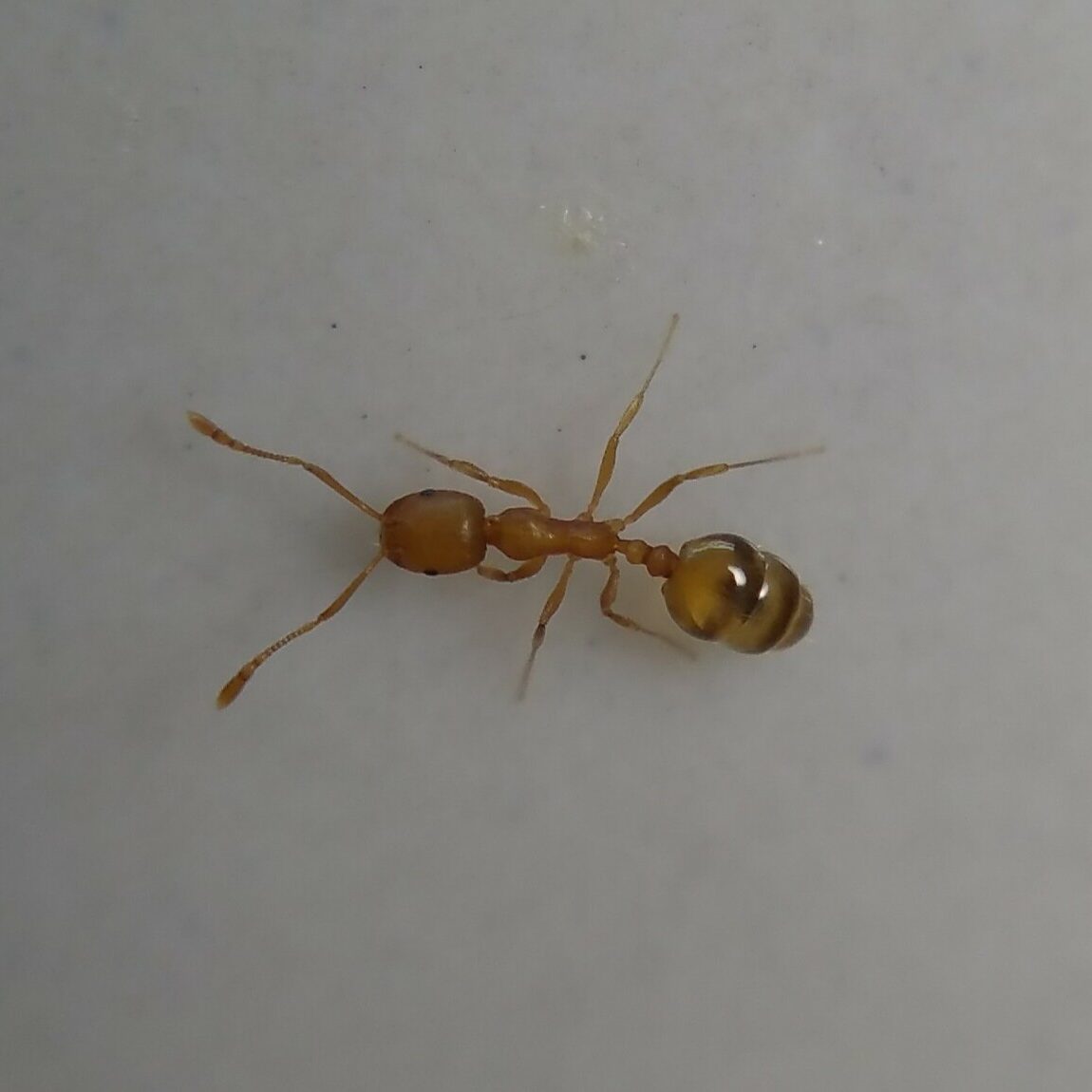
Scientific Name
Monomorium pharaonis
Size
1/16″
Key Features
- Yellowish to reddish body
- 12 segmented antenna ending in a 3 segmented club
Biology and Habits
Pharaoh ants form very large colonies consisting of many queens and her workers. Colonies can reach as many as several hundred thousand ants and often “bud” into smaller colonies. Reproductives do not swarm like other ant species, but instead mate inside of the colony. Pharaoh ants nest in a wide range of environments, provided they are humid and near sources of food and water. Nests are frequently located in inacceccible areas, including behind walls, electrical outlets, under floors, inside of furniture, or in ceilings. Due to their extremely small size, they are capable to getting into almost anything and are a particular problem in hospitals, restaurants, grocery stores, nursing homes, and apartments. Pharaoh ants have a wide range of preference for food and will readily feed on sweets, proteins, greases, and even blood or bodily fluids. They will travel in long trails far from their nest in search of food or moisture.
Control
Pharaoh ants are similar in appearance to thief ants and should be positively identified prior to treatment. Liquid and dust applications should NOT be used on this species of ants as they may respond by moving their colonies or budding into multiple smaller colonies. This is a common problem when using over the counter sprays. Instead, baits should be prioritized in areas where the ants are most likely to forage or nest. Warm, moist locations, such as near sinks, dishwashers, motor housing in appliances, aquariums, water fountains, or along trails of ants are good places for baiting. While baiting, it is important to leave the ants alone, as even disturbances from cleaning solutions can disrupt the process and cause populations to move or bud. The exterior of the home or building should be treated to prevent entry from outdoor nesting colonies.
Need help identifying or controlling this pest? Give Revolution Pest Defense a call or send an email for a free inspection.
Bennett, G. W., Owens, J. M., & Corrigan, R. M. (2014). Truman’s Scientific Guide to Pest Management Operations (Seventh). North Coast Media, LLC.