
Shrew
Scientific Name
Family Soricidae
Size
2 1/2 – 5″ including tail
Key Features
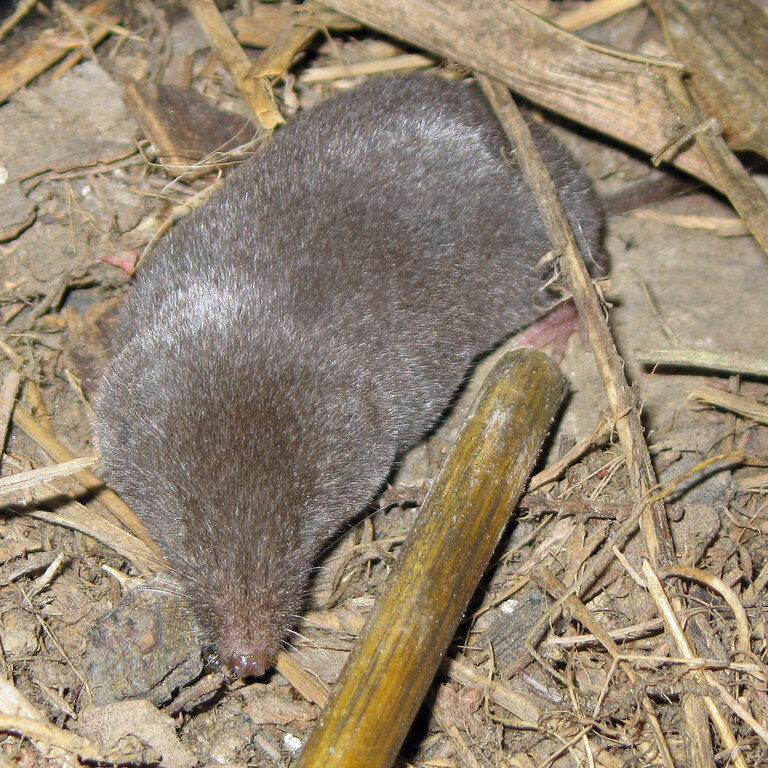
- Dense brownish gray fur
- Elongated snout
- Small eyes and ears
- Five clawed toes
Biology and Habits
Illinois is home to several species of shrews. Shrews produce 1-3 litters per year with an average of 2-10 young. The gestation period lasts approximately 21 days. The average lifespan of a wild shrew is 18 months. Their diet consists of insects, spiders, centipedes, seeds, roots, and vegetable matter. Occasionally, they eat other small animals including birds, snakes, and mice. Shrews are most active at night and will travel underground in burrows and above ground on runways. They are closely related to moles.
Control
Shrews very rarely enter buildings and homes. On occasion, they may enter through a hole in the foundation or fall into a window well. However, their presence is often only temporary, and long term control is not necessary. The most effective means of controlling shrews is baiting snap traps with meat. Baits are not registered to control shrews and should not be used for this purpose.
Need help identifying or controlling this pest? Give Revolution Pest Defense a call or send an email for a free inspection.
Bennett, G. W., Owens, J. M., & Corrigan, R. M. (2014). Truman’s Scientific Guide to Pest Management Operations (Seventh). North Coast Media, LLC.
Wild about Illinois insectivores!. Illinois Department of Natural Resources. (n.d.). https://dnr.illinois.gov/education/wildaboutpages/wildaboutwildmammals/wildaboutmammalsinsectivores.html