
Thief Ant
Scientific Name
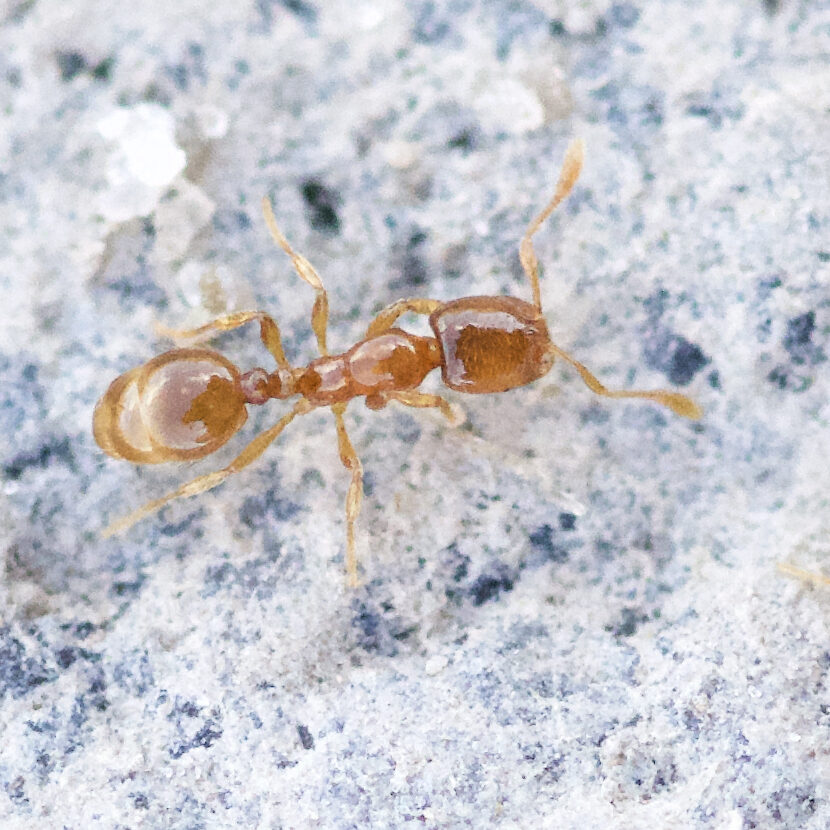
Solenopsis molesta
Size
1/16″
Key Features
- Yellow to dark brown body
- 10 segmented antenna ending in a 2 segmented club
Biology and Habits
Thief ants form colonies consisting of many queens and her workers. Winged swarmers appear from June through late fall. Colonies can reach several thousand ants and are commonly found near or in other ant colonies, where they rob food and brood. Thief ants may also nest in small crevices of wood, masonry, under soil, in trees, or even under objects and trash. These ants will feed on sweets but have a preference for protein based foods including meats, cheeses, grease, nuts, and dairy products. They also feed on insects, honeydew and germinating seeds.
Control
Controlling thief ants can be achieved by locating a nest and treating it directly. This can be accomplished by following foraging workers back to their colony. Applying dust in voids and treating the exterior perimeter with an appropriately labeled insecticide can prevent foraging workers from entering the structure. Protein based baits are also highly effective.
Need help identifying or controlling this pest? Give Revolution Pest Defense a call or send an email for a free inspection.
Bennett, G. W., Owens, J. M., & Corrigan, R. M. (2014). Truman’s Scientific Guide to Pest Management Operations (Seventh). North Coast Media, LLC.